A hot rolling mill reduces a reheated billet into bar, rod, flats or structural sections through successive passes. Reheating, roughing, finishing, cooling and cutting must work as one coordinated line.
Five connected stages
Charging & reheating
Billets are charged and brought to rolling temperature in the reheating furnace. Charge sequence, soaking time and discharge temperature set the condition of every pass that follows.
Roughing
The heated billet enters the roughing stands, where the heaviest reductions in cross-section are taken and the initial pass shape is established.
Intermediate & finishing passes
Successive stands reduce and shape the stock toward final dimensions. Roller guides and guide boxes hold it on the pass line so tracking, tolerance and surface stay consistent at speed.
Quenching & cooling
Bar leaving the finishing stand is quenched and self-tempered where TMT properties are required, then laid across the cooling bed to cool evenly and stay straight.
Shearing & bundling
Shears cut the rolled product to length before inspection, counting, bundling and tying for dispatch.
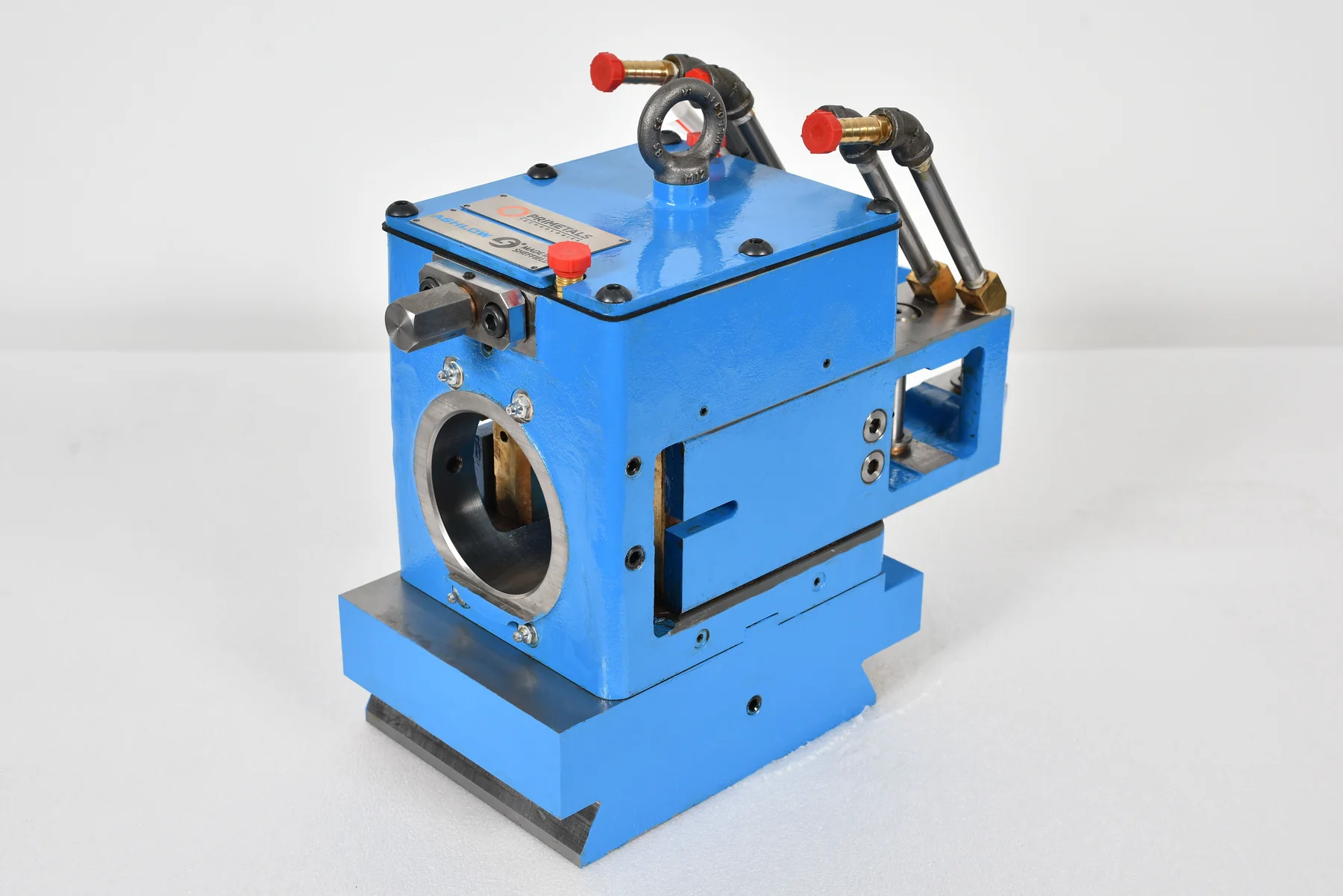
A mill is only as reliable as its interfaces.
Typical projects can involve a reheating furnace, roller tables, roughing, intermediate and finishing stands, pinion stands and gearboxes, roller guides and guide boxes, loopers, quenching equipment, cooling bed, shears and bundling. Gearboxes transmit power to the stands; hydraulic cylinders position and clamp equipment; guides control the stock; automation coordinates speed, sequence, interlocks and diagnostics.
What to prepare before requesting a proposal
- Billet section, length and weight
- Finished bar, rod or section range
- Steel grades and required mechanical properties
- Target output per hour and annual or shift tonnage
- Reheating method and available fuel or power
- Quenching, cooling-bed and cut-length requirements
- Available plant layout, utilities and integration points
- Required automation, operator and reporting functions
Where rolled sections are used
Hot rolled bar and sections serve construction and infrastructure, forging and automotive components, fabrication, material handling and general engineering. The final application influences grade, tolerance, surface condition, mechanical properties and production flexibility.
Planning a new mill or modernization?
NSG EA can review the product range, existing equipment and priority performance constraints.
Discuss the project