Quenching System
Quench boxes, nozzle sets and water-line equipment that give TMT bar its tempered rim and softer core straight off the finishing stand.
Discuss Your RequirementSpecified around the line—not selected from a generic list.
TMT properties are made in the quench line, not after it. Nozzle design, water pressure and flow, box length and the self-tempering distance to the cooling bed decide rim depth, core hardness and the final mechanical properties. NSG EA engineers quenching equipment around the section range, rolling speed and the water system the plant already has.
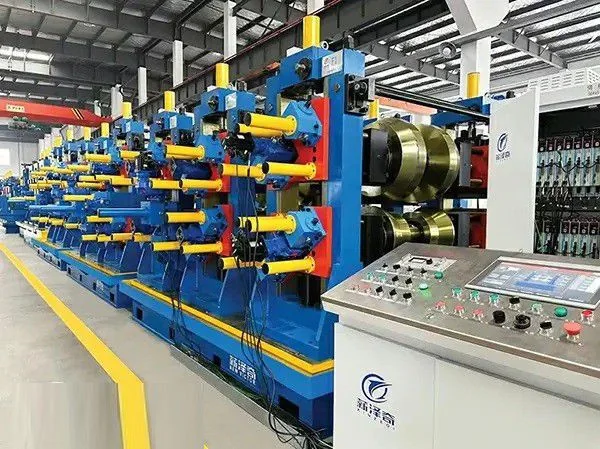
Engineering scope
- Quench boxes, chambers and nozzle assemblies
- Water-line headers, valves and flow control
- Line length and self-tempering layout
- Section-specific nozzle and insert sets
- Replacement inserts, seals and wear parts
- Retrofit of quenching lines on existing bar mills
Typical applications
- 01TMT and reinforcement bar production
- 02Rounds and section quenching
- 03Grade and property upgrades on existing mills
- 04Replacement of worn quench line equipment
Questions buyers ask early
What decides quenching line length?
Finished section range, rolling speed, entry temperature, target mechanical properties and the available water pressure and flow together fix the number of boxes, nozzle sizing and the self-tempering distance before the cooling bed.
Can a quenching system be added to an existing mill?
A quench line can be retrofitted where the distance between the finishing stand and the cooling bed, the water system capacity and the pumping arrangement support it. That assessment comes before equipment selection.
Share it and we will come back on feasibility, scope and the data still needed.
Discuss your quenching requirement.
Share the application, product range, current equipment and performance objective. The conversation starts with your process—not a standard catalogue answer.